World Cup 2026, Day 1: Home Again, Home Again
Jun 11, 2026
Given everything that’s happened since, it can be hard to remember that there was a widespread fear, maybe even a widespread expectation, that the 1994 World Cup in the USA was going to fail abjectly.
It had been a decade since the country had even had a nationwide professional league, and even that league had been the sort of burn-bright-then-fade-away operation that had been widespread across American sports in the 1970s and 1980s. This was a period in which the ABA, WHA, and USFL had all briefly challenged established leagues, then imploded with varying blast radii; that the NASL had briefly brought Pele craziness to New York, then disappeared, was in keeping with the times.
The 1994 World Cup was FIFA’s attempt to break into the world’s largest commercial market, one that came probably eight years after they originally intended. The 1986 World Cup was originally set to be in Colombia, but when the Colombians bowed out amidst a tournament expansion, the US (and Canada) were among the frontrunners to host the tournament. Many at FIFA wanted the USA to be the replacement, but a combination of incompetence at the U.S. Soccer Federation and an entrenched old guard at FIFA ended up putting the tournament back in Mexico, for the second time in 16 years.
Even by 1994, there was a general sense among certain quarters of the American public (chiefly led by crusty old sportswriters) that holding the soccer World Cup in the USA was approximately equivalent to holding the Cricket World Cup in the USA, that soccer was a game for foreigners played by foreigners and of no importance or interest to any American who was not in some way foreign themselves.
You could sense that FIFA agreed on some level, demonstrated by their scheduling. The vast majority of games began between 12:30pm and 4pm Eastern time, the better to make them late-evening events in Europe, even though this meant things like “Mexico and Ireland played in midafternoon in Orlando in June, which is like scheduling a game on the surface of the sun.”
The fear was that the games would be played in front of empty stadiums. What ended up happening is that the tournament set an attendance record that’s still never been broken; three and a half million people went to a game that summer, with an average attendance of nearly 69,000, mostly because they played a bunch of games at the cavernous Rose Bowl.
For a 12-year-old watching his first soccer games, it was intoxicating.
I was aware that the USA had made the 1990 World Cup, and was certainly more interested in soccer than the average outstate eight-year-old; we even had the enthusiastically-titled NES video game “Goal!”, its gameplay chiefly focused on attempted slide tackles.
(It also had a “Shoot Competition,” in which the player had to try to beat two defenders and score against a defective goalkeeper who would regularly dive out of the way of your shot. You picked one of three players for this mode: Hansen, Roko, or Juarez. I think the important thing to remember that this was definitely NOT Scotland defender Alan Hansen and the center player was definitely NOT Pelé with letter shifts, so just get those thoughts out of your head right now.)
We even had a soccer ball at our house, which had to be one of fewer than five soccer balls in my entire hometown at the time. I can remember pretending to be Paul Caligiuri, trying to score goals under the clothesline in the backyard (Caligiuri was the only player I knew for sure, thanks to him scoring the fateful goal in qualifying against Trinidad and Tobago, which I had seen on the news or on Wide World of Sports or something.)
But, for me, those 1990 World Cup games might as well have taken place underwater at midnight. The games were on ESPN and TNT; I’m not at all certain we even had cable TV in 1990. I didn’t see a single minute of any of the games, and - except for Goal! and occasional backyard soccer pretending - I’m pretty sure I didn’t think about soccer again until 1994.
That 1994 World Cup, though, was front-and-center in my consciousness. Thanks to the soccer-loving folks at Sports Illustrated for Kids, and ESPN and ABC showing all the games (we definitely had cable by then), a nascent pre-teen soccer fan could finally put up his first World Cup wall chart and follow the USA through its attempt to - unlike the 1990 World Cup - not get destroyed.
So I remember being in the basement, watching Eric Wynalda carve up the Swiss from a free kick. (I also remember my dad, who I’m pretty sure was also watching his first soccer match, saying, “Wow, there’s a lot more action than I thought.”) And I remember being in my grandparents’ kitchen in Hopkins, watching on the tiny kitchen TV as the USA somehow beat Colombia. And then, at my other grandparents’ house, watching Brazil’s Leonardo break Tab Ramos’s jaw and get himself sent off, but ten-man Brazil still beating the USA in the knockout round.
Since then, I have never not followed the USA soccer teams. And I promised myself that, someday, I would do the thing that 12-year-old me couldn’t do, and go to the men’s World Cup.
In a different world, I’d have become a die-hard that has traveled the world, following the USA, but life hasn’t worked out that way. For years, I didn’t have near enough money to think about crossing the globe for soccer; then, I got married and had kids, and going to Brazil or Russia or Qatar for soccer was out of the question. And besides, the USA had been in contention to host the tournament again since at least 2018, the selection for which began in 2009; for most of my adulthood, it’s been less of a question of whether the USA would host the tournament, and more of a question of when.
It’s finally happening, and - thanks to my cousin and his family in Seattle, who are too kind to say no to their lunatic relative from the Midwest - I’m finally doing what 12-year-old me wanted to do.
I wish, of course, that the tournament wasn’t getting underway with some of the sourest vibes of any worldwide sporting event in history. FIFA has taken CONCACAF’s price-gouging to a next level, and has focused on extracting every possible dollar from every ticket. The USA government has started a war with a tournament participant and made getting to the USA difficult-to-impossible for fans, and in one case, a referee.
I’m used to these events causing disasters - remember the dueling toilets at the Sochi Olympics? Discovering that the hockey rink was too small at the Milan-Cortina Olympics, just this year? Brazil’s stadiums failing to get completed in time for the 2014 World Cup? - but I had, naively, hoped that the USA and its already-completed infrastructure would avoid all of these pitfalls.
It was, in the end, too much to hope for that a soccer tournament would somehow rise above the murk.
None of which is stopping me from going, of course. I’m utterly fascinated to see what Seattle during the World Cup is like, whether it’s the equivalent of the town hosting five Super Bowls in two weeks, or whether it’s like a run-of-the-mill Seahawks game week - noteworthy, but not all-consuming. I’ll be in town for all four group-stage games that the city is hosting. It currently seems unlikely that I’ll be able to afford to sell all of the body parts I’d need to sell to get a ticket for USA-Australia, which leaves three games: Belgium-Egypt, Bosnia and Herzegovina/Qatar, and Egypt/Iran.
None of them will be showpieces, and the middle one might be in contention for worst game of the tournament, but I don’t really care.
32 years later, the men’s World Cup is back. Sour vibes or no, I couldn’t be more excited.
Loons begin new era without Dayne St. Clair, Hassani Dotson
Dec 18, 2025
Hard as it might be to believe, Minnesota United is already more than halfway through its offseason, with players returning to Minnesota for the beginning of preseason in the second week of January.
So far this offseason, though, the biggest Loons headlines have been about goalkeeper Dayne St. Clair and midfielder Hassani Dotson — two players that won’t be in St. Paul come 2026.
The Loons season ends with a 1-0 loss in San Diego
Nov 26, 2025
GAME STORY: Minnesota United lose in MLS Western Conference semifinals to San Diego FC 1-0
SAN DIEGO — There are two ways you can look at Minnesota United’s 2025 season. On one hand, the team set a club record for points in a season and hosted a playoff round for the first time, in a full non-COVID season, since 2019.
The Loons beat Inter Miami. They beat San Diego. They beat Seattle — twice, plus twice more on penalty kicks in the playoffs. Their prowess from set pieces earned them worldwide recognition, and for the first time, it felt like the club had a distinct identity.
On the other hand, just like 2024, their season is over after the Western Conference semifinals. They again haven’t qualified for the Concacaf Champions Cup, which was viewed somewhat as a potential consolation prize for the season. And once again, they haven’t required the construction of a trophy case at team headquarters.
A good season, but not a final destination.
Read more: Loons eliminated in Western Conference semifinals
Loons head to San Diego for Western Conference semifinals
Nov 24, 2025
Minnesota United may be playing in the conference semifinals Monday night in San Diego, but despite advancing past Seattle in the first round of the MLS playoffs, the Loons are in the midst of what might be their worst stretch of their entire year.
Count their shootout victories against the Sounders as draws, and the Loons are mired in a four-game winless streak, with just one win in their last eight games across all competitions. This swoon comes at the end of a year in which Minnesota had only one regular-season winless streak that stretched as far as three games.
MLS votes to change calendar, starting in summer 2027
Nov 14, 2025
The way Major League Soccer figures it, the league schedule already starts in February and ends in December.
Why not flip things around and hold the playoffs in the balmy light of May rather than the frigid dark of winter?
The MLS Board of Governors voted Thursday to reverse the league calendar starting in the summer of 2027. After a shortened transitional season in the spring of 2027, the 2027-28 season will begin in July and run through the following May.
Read more from the Star Tribune: MLS aligns calendar with top soccer leagues
Loons beat Seattle on penalties after wild, epic Game 3
Nov 9, 2025
You could go a decade as a soccer fan and never see a result quite as hard to believe as Minnesota United’s playoff victory over the Seattle Sounders on Saturday.
It had everything. Early goals. Late goals. A red card. An improbable comeback by a team playing a man short. And, in the end, a penalty shootout that had to be seen to be believed, one in which one goalkeeper scored the eventual game-winning penalty and then watched the other goalkeeper kiss his own penalty off the crossbar.
There is simply not a good place to begin with a game like Saturday’s Minnesota United penalty shootout victory over the Seattle Sounders to decide their first-round playoff series.
Not in a game like that. Not in a game with six goals, with Seattle scoring twice in the first eight minutes and once in the final three, with the Loons going down to 10 men while down a goal and, impossibly, scoring twice in the second half to turn a certain loss into a second-half lead.
Loons prep for Game 3 after Game 2 loss
Nov 8, 2025
As Minnesota United and the Seattle Sounders head into the deciding Game 3 of their first-round playoff series on Saturday, the fifth game between the two teams this season, neither has much in the way of tactical surprises left to spring. It’s less about wrong-footing the opposition, and more about execution and intensity and energy. The Loons, despite knowing what was coming in Game 2 on Monday, ended up on the wrong side of that.
Read more: MNUFC wants to bring intensity to Game 3 vs. Seattle
GAME 2: Sounders 4, Loons 2
SEATTLE – It was almost impossible to find a player, coach, or staff member from Minnesota United that had anything positive to say about the best-of-three format of the first round of the MLS playoffs.
After the Loons dropped Game 2 to the Seattle Sounders 4-2 on Monday night at Lumen Field, though, the entire club might be a little more positive about having a Game 3 still to play.
Ed. note: I’m inordinately proud of that SEATTLE dateline - it worked out perfectly that my family trip to Seattle coincided with Game 2.
Read more: Minnesota United lose to Seattle Sounders 4-2 in Game 2 of first-round MLS playoff series
Dayne St. Clair is Goalkeeper of the Year
Minnesota United has become known for its defense, and goalkeeper Dayne St. Clair is getting some recognition for his contribution to that reputation. MLS announced Monday that St. Clair is the 2025 Goalkeeper of the Year, an honor for a keeper who reached another level this season.
Read more: MNUFC’s Dayne St. Clair is MLS Goalkeeper of the Year
EARLIER: MNUFC faces Seattle Sounders in Game 2 of MLS playoff series
Loons beat Seattle on penalties in Game 1
Oct 28, 2025
Sure, Minnesota United beat Inter Miami earlier this season. Sure, they might go on to do exceptional things in the MLS Cup playoffs.
But for longtime Loons fans, the highlight of 2025 is going to be that, after years and years, Minnesota finally seems to have the Seattle Sounders’ number.
GAME STORY for the Star Tribune: MNUFC beats Sounders on penalty shootout in Game 1
In two years of talking to Minnesota manager Eric Ramsay after the final whistle of games, I can only think of two times he’s been genuinely critical of a referee.
Both times, that referee was Alexis Da Silva.
In a short time, Da Silva has earned a reputation among Minnesota fans, one akin to that of Phil Cuzzi with Twins fans.
It began in the US Open Cup semifinal against Austin, when Da Silva declined to make several controversial calls. He declined to send off Osman Buskari, after Buskari - miles from the ball - had petulantly kicked out at Anthony Markanich, catching him above the knee. He declined to award the Loons a penalty, after Kelvin Yeboah was kneed so hard in the hamstring in the penalty area that Yeboah missed almost the entire remainder of the regular season. He declined to sanction goalkeeper Brad Stuver, even after it seemed clear that Stuver had stopped a promising Loons attack by handling the ball outside the penalty area.
In every case, Da Silva not only declined to make an important call, but declined to use the video monitor to review his decision.
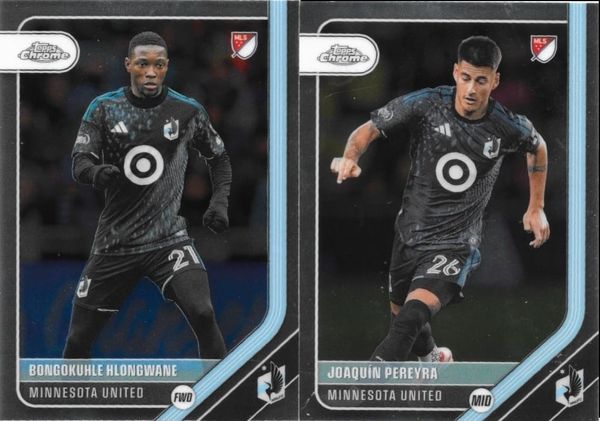
So when Jackson Ragen shoved over Bongokuhle Hlongwane in the penalty area, nine minutes into the Loons’ playoff match with Seattle, as Hlongwane was attempting his shot, you can about guess what Da Silva did.
No penalty. No review.
“[It was] as clear cut a penalty as I’ve seen not given over the course of this year,” said Ramsay. “I’d be amazed if 99 referees out of 100 don’t look at that for five seconds and think that’s a penalty. It’s a real shame, in a sense, because you have to be able to trust officials in those moments that you’re going to get stuff like that, particularly with VAR these days. I’m glad I can stand here as the winning coach because with that not being the case, that would have been a real tough pill to swallow.”
As is almost always the case, the referee’s answers to a pool reporter’s questions were pretty boilerplate. Asked about the lack of VAR check, the “Since the VAR did not see a clear and obvious error with the on-field decision, there was no review recommended and thus the referee was not required to take a further look the on the monitor.”
In regards to the decision to not give a penalty, the referee said, “The determination of the contact made by Jackson Ragen on Bongi Hlongwane during the ninth minute was that the level of force was not enough to warrant a foul, and the player had a clear opportunity to shoot on goal. The contact did not rise to the level of a penalty kick and red card offense.”
Side note: I love that even referees refer to him as “Bongi”.
According to Dayne St. Clair, who likely omitted some of his own colorful language in the account, the yellow card that he earned from Da Silva in the next minute was simply for pointing out that Da Silva had just called a foul on a Seattle player for pushing Michael Boxall in the back, the exact same play that he’d declined to call on the other end of the field.
“The fact [is] that I got a yellow card for just saying it’s the same consistency, because Boxy gets the same push in his back, but because he’s the defensive player, he calls it,” said St. Clair. “[For] us, from referees, we’re always looking for consistency, and we felt like there was a lack of consistency throughout the game because it’s hard as a player, because you don’t know what’s a foul and what’s not, and you’re trying to waver the line.”
It was, admittedly, something of a surprise to see Da Silva back in the center for a Loons playoff game, so soon after he’d been at the center of Minnesota controversy. After this one, you can be sure that Minnesota fans will be checking from now on to see if he’s again in the center.
Yellow card accumulation not much of a factor in the playoffs
St. Clair’s early yellow was the beginning of a trend. By the end, five Loons had gone into the referee’s book, though St. Clair’s yellow might have been the only one that wasn’t deserved.
That said, those five Loons don’t now stand on the precipice of being suspended. In the playoffs, it takes three yellow cards to earn a suspension, and those yellow cards also reset following the conference semifinals.
Without getting sent off, then, basically the only way to get suspended for yellow card accumulation is to rack up a yellow card in each of the matches of a first-round series that goes to a third game.
It’s also worth remembering that yellow cards in a match don’t carry over to the penalty shootout, so it’s possible to get a yellow during the match and a yellow during the shootout, but not get sent off. So St. Clair in particular has a much easier path towards getting three yellow cards in two games.
It’s something for the Loons to keep an eye on, of course, but there’s no immediate danger of suspensions.
Gameday: Loons meet Seattle in Game 1 of MLS Cup playoffs first round
Oct 27, 2025
For those of us who are steeped in American sports, the beginning of the playoffs means one thing: finally, the games count, for real. The “regular season” is over, with all of the qualifications that term brings: regular. Normal. Workaday, ho-hum, quotidian… boring.
One of the fascinating things about MLS is that, while the league still treats the playoffs with American reverence, many of the participants weren’t raised with that same mindset. And you can include Minnesota United manager Eric Ramsay in that group.
“I look back with a lot of pride on the 34 games,” he said. “I think it’s a measure of a coach, a group of coaches, and a team of players, what they can do over 34 games on a really consistent basis, and that’s sort of the yardstick that I’m used to measuring team success by. And I think to a large extent that is sort of the body of work that I will look back on, at the end of this season, irrespective of how the playoffs go.”
In soccer terms, the playoffs are simply another cup competition, with slightly more restrictive qualifying criteria. Ramsay understands how much more weight the playoffs carry, here, and calls them a “really exciting thing to be part of” – but should the Loons fail to advance, he’s not going to call the season a failure.
“I don’t think they’re necessarily the competitions to judge the progress of a group, or judge the group’s ability,” he said. “Lots is controlled, to an extent, by it being a best-of-three, but anything can happen in these sort of one-off occasions… Irrespective of how it pans out over the coming weeks and months, [it’s crucial that we] not forget what we’ve done this season, and how it represented such a step forward in comparison to last season.”
In some ways, then, we can already write the summary of the Loons’ season: club records across the board. The Loons set MLS records for points (58, five more than 2019), wins (16), fewest losses in a full season (8), and goal difference (+17). They had more points per game (1.70) than the 2020 season, as well.
All of that said, you can be guaranteed that the players aren’t taking the playoffs lightly, even if it’s not the measure of their season. You could see it in training last Friday, as a minor skirmish broke out after a team-wide drill; the competition is ramping up.
“It shows that everyone wants to play and everyone wants to win this game,” said Bongokuhle Hlongwane. “So I think this game means a lot to us.”
Injury updates
As always, Ramsay wasn’t tipping his hand on Sunday about who might start, but he did say that Kelvin Yeboah and Morris Duggan were available for selection.
“Both have trained somewhere near fully with us, making some allowances for the particularities of their injuries,” said Ramsay. “But if I opted to start both of them, both would be available.”
Carlos Harvey, who’s been doing outside training sessions as he recovers from meniscus surgery, is still a bit further away. “Obviously, [Game 1] is a step too soon, and it will be touch and go for the second game,” said Ramsay. “I think if [the series] goes to a third game, then he’s got every chance of being involved in that one, and that will take us somewhere near to the full contingent.”
The playoffs have meant that both Yeboah and Harvey are on accelerated return timelines. “I think we’re at that delicate stage with both Kelvin and Carlos, whereby I think if it was a different stage of the season, you’d probably show more patience,” said Ramsay. “We’ve got to force the issue, within the parameters of safety and health for the players. But both of them are itching to get going, and we’ve got to make sure that we make sensible decisions.”
MNUFC2 and the “biggest upset in league history”
Minnesota United 2 is making the most of its first-ever playoff run. The Loons beat Real Monarchs (Real Salt Lake’s second team) in the first round, and Sunday, pulled off an even bigger upset: a 2-0 win against St. Louis City 2.
Logan Dorsey capitalized on a defensive mistake in the first half and lashed home the opener, and Darius Randell headed home a corner kick in the second half to give the Loons an insurance goal.
At the end of the game, broadcaster Jake Griffith referred to it as “the biggest upset in league history,” given that SLC2 was the top seed in all of MLS NEXT Pro, was playing at home, and was viewed as something of a juggernaut.
The Doubloons played SLC2 three times in the regular season, losing all three – 3-2 at home and twice on the road, once in a penalty shootout and once 4-0.
Next week, MNUFC2 heads back to the mountains for the Western Conference finals, to play Colorado Rapids 2. It’s a feather in the cap for the second team, which is having by far its best of the four seasons of its existence.
“We’re really pleased with them because they’re a really good group of guys,” said Ramsay. “The players, they’re a phenomenal group to watch work.”
MORE, FOR THE STAR TRIBUNE: MNUFC plays Seattle Sounders in first round of MLS Cup playoffs
The 2025 MLS Conference-Only Standings
Oct 26, 2025
I’ve posted the MLS conference-only standings before, and there’s a simple reason: the MLS schedule is silly.
What you have in MLS is two leagues, Western and Eastern, each playing a full round-robin, plus a number of exhibition games against the other league / conference.
It’s quite obvious that mixing all of these games together, when it comes to playoff seeding and qualification, is nonsense. It’s highly dependent on which teams from the other conference land on your schedule.
With this in mind, let’s look at the “true” standings in each conference, with the exhibition games removed.
WESTERN
| Rk | Team | Points | GP | PPG | W-L-T | GF-GA | GD |
|---|---|---|---|---|---|---|---|
| 1 | San Diego | 55 | 28 | 1.96 | 17-7-4 | 59-34 | 25 |
| 2 | Vancouver | 53 | 28 | 1.89 | 15-5-8 | 53-32 | 21 |
| 3 | Minnesota | 47 | 28 | 1.68 | 13-7-8 | 47-32 | 15 |
| 4 | Los Angeles FC | 46 | 28 | 1.64 | 13-8-7 | 55-36 | 19 |
| 5 | Seattle | 46 | 28 | 1.64 | 13-8-7 | 47-39 | 8 |
| 6 | Austin | 39 | 28 | 1.39 | 11-11-6 | 27-36 | -9 |
| 7 | Salt Lake | 38 | 28 | 1.36 | 11-12-5 | 34-42 | -8 |
| 8 | Dallas | 38 | 28 | 1.36 | 10-10-8 | 40-41 | -1 |
| 9 | Portland | 38 | 28 | 1.36 | 9-8-11 | 35-37 | -2 |
| 10 | San Jose | 35 | 28 | 1.25 | 10-13-5 | 48-52 | -4 |
| 11 | Colorado | 34 | 28 | 1.21 | 9-12-7 | 34-46 | -12 |
| 12 | Houston | 32 | 28 | 1.14 | 8-12-8 | 36-45 | -9 |
| 13 | LA Galaxy | 27 | 28 | 0.96 | 6-13-9 | 38-47 | -9 |
| 14 | St. Louis | 26 | 28 | 0.93 | 6-14-8 | 34-47 | -13 |
| 15 | Kansas City | 23 | 28 | 0.82 | 6-17-5 | 37-58 | -21 |
Removing Eastern Conference games ends up with no major changes to the overall standings in the west, happily. The bands of teams are even more clear (SDFC and Vancouver at the top, Minnesota and LAFC in the next , then a glut of teams with losing records below them).
EASTERN
| Rk | Team | Points | GP | PPG | W-L-T | GF-GA | GD |
|---|---|---|---|---|---|---|---|
| 1 | Philadelphia | 55 | 28 | 1.96 | 17-7-4 | 49-24 | 25 |
| 2 | Miami | 55 | 28 | 1.96 | 16-5-7 | 64-41 | 23 |
| 3 | New York City | 52 | 28 | 1.86 | 16-8-4 | 43-32 | 11 |
| 4 | Charlotte | 49 | 28 | 1.75 | 16-11-1 | 44-39 | 5 |
| 5 | Cincinnati | 49 | 28 | 1.75 | 15-9-4 | 38-31 | 7 |
| 6 | Nashville | 45 | 28 | 1.61 | 13-9-6 | 50-36 | 14 |
| 7 | Columbus | 42 | 28 | 1.5 | 11-8-9 | 47-46 | 1 |
| 8 | Chicago | 40 | 28 | 1.43 | 11-10-7 | 53-52 | 1 |
| 9 | Orlando City | 38 | 28 | 1.36 | 9-8-11 | 51-45 | 6 |
| 10 | New York | 35 | 28 | 1.25 | 10-13-5 | 34-39 | -5 |
| 11 | New England | 32 | 28 | 1.14 | 9-14-5 | 37-41 | -4 |
| 12 | Atlanta | 24 | 28 | 0.86 | 5-14-9 | 32-54 | -22 |
| 13 | Montréal | 21 | 28 | 0.75 | 4-15-9 | 26-50 | -24 |
| 14 | Toronto | 21 | 28 | 0.75 | 3-13-12 | 32-42 | -10 |
| 15 | D.C. United | 20 | 28 | 0.71 | 3-14-11 | 22-50 | -28 |
The biggest change to the East standings is that Cincinnati drops all the way down to fifth place, from second. They avoided the entire top five in the West, and cleaned up, earning 16 of 18 possible points in those matchups.
Cincinnati’s polar opposite is NYC, which had a tough schedule - drawing Minnesota, LAFC, and Seattle - but also managed just four points against the West, total.
Philadelphia still wins the East in this scenario, but it comes down to number of wins (or goal difference, if you prefer).
Congratulations to San Diego and Philadelphia, who are (still) the true conference champions in MLS. And it’s nice to know that this year, the playoff teams remained the same.
In the future, though, I still think MLS needs to change how the champions of each conference are calculated, to this method. It’s only fair.